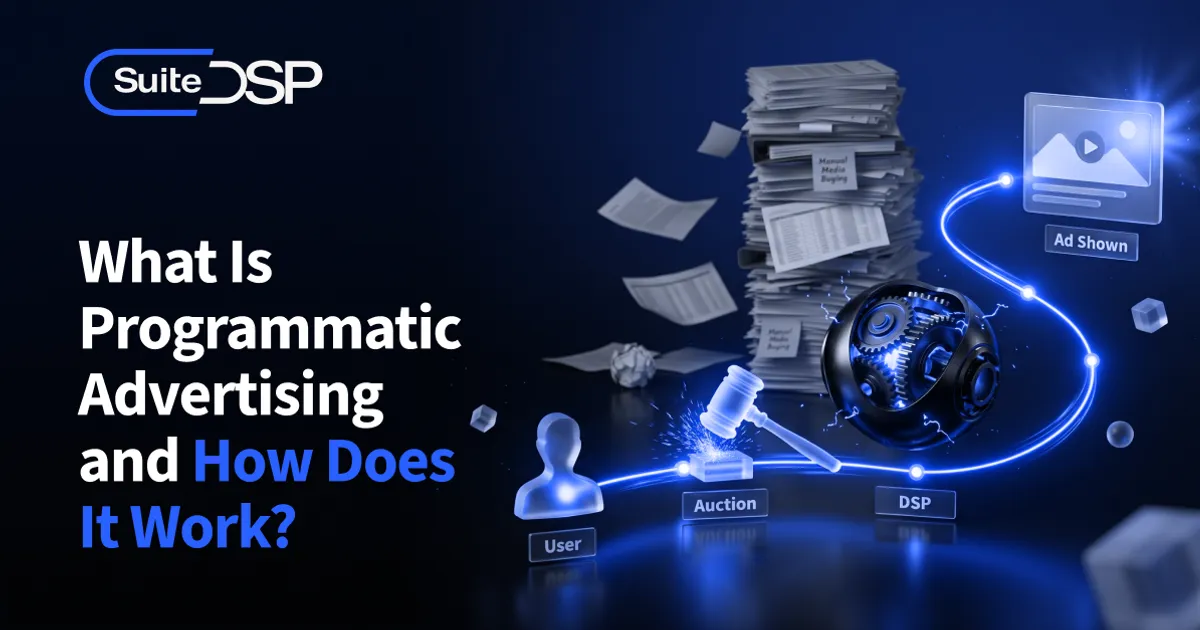
Programmatic advertising is basically the process of buying and selling advertising space automatically through software algorithms and data in real time to ensure that the ads reach the right audience. Programmatic advertising differs from regular digital advertising in the sense that while in regular digital advertising, the advertiser had to interact with the publisher to discuss the pricing of the advertisement and placement, in programmatic advertising, most of these processes are automated using technologies such as RTB. That is what programmatic advertising is all about.
However, what is programmatic advertising and how is it implemented in practice? Why do more and more companies rely on automated technology for reaching out to their target audience?
Through this easy-to-follow guide on programmatic advertising, we are going to learn about its technology, popular ad types, and deals; get to know more about examples of programmatic advertising; and know more about the right way to create a successful advertising campaign. This is the guide that addresses your search, "What is programmatic advertising for dummies?"
What Is Programmatic Advertising?
Programmatic advertising refers to the buying and selling of digital advertising inventory via software and algorithms. Advertisers use technology to find advertisements that work for them and place orders as opposed to negotiations with publishers on an individual basis.
Here lies the fundamental programmatic advertising definition: the application of technology to simplify digital media transactions for advertisers. With regards to digital marketing, programmatic advertising can be utilized in web pages, mobile applications, video streaming platforms, and connected television. The important thing to note about programmatic advertising is that programmatic is about the method in which advertising inventory is purchased, not the form of advertisement itself.
For instance, an ad that may be put up on a news site can either be bought through direct deal or a programmatic platform. For anyone asking what is programmatic advertising explained simply, think of it as an automated marketplace connecting advertisers with publishers offering available ad space.
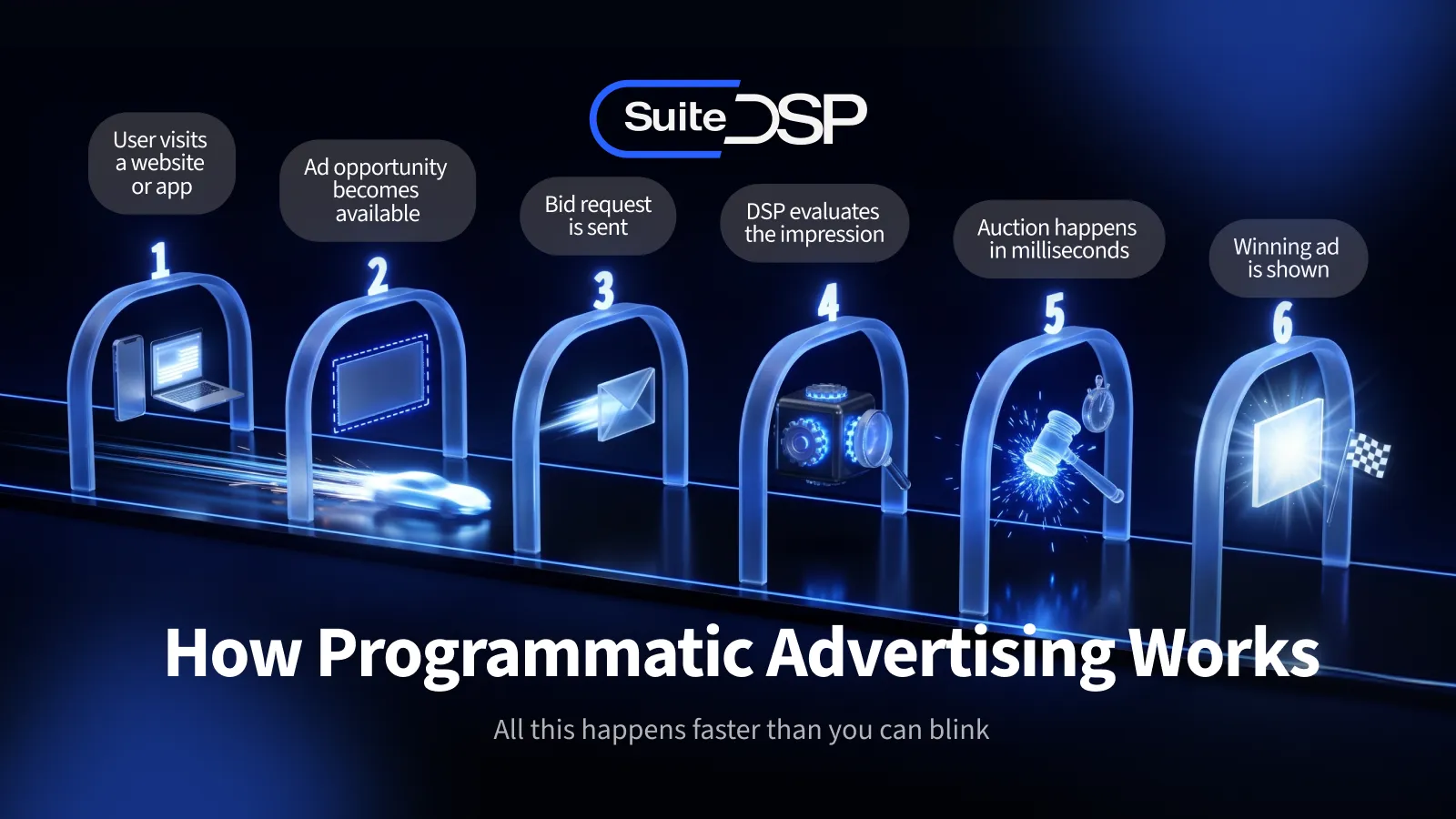
Real-time programmatic bidding algorithms evaluate and purchase individual ad impressions in milliseconds to maximize conversion efficiency.
How Does Programmatic Advertising Work?
Programmatic advertising can only be comprehended by examining the two ends of the advertising industry eco-system, which include the supply end and the demand end. Publishers constitute the supply end. They offer advertising inventory through various digital channels, including websites, applications, video on-demand services, among others. Advertisers make up the demand end. They look forward to purchasing such inventory in order to reach out to their prospective customers.
What usually takes place during real-time bidding is as follows:
A user visits a website or an application that has open space for advertisements.
Publishers make an ad opportunity available to the qualified buyers.
The details regarding the opportunity are provided through a bid request.
A demand side platform (DSP) checks whether the ad impression qualifies according to the campaign of the advertiser.
It is decided by the DSP whether the ad should be bought and at what price.
An ad is chosen through the auction process and displayed.
This process can occur within a few milliseconds before the entire webpage has been fully loaded. All programmatic transactions do not essentially have to use the open auction model. The advertisers will also be able to purchase the media using the private marketplace, preferred deal, and guaranteed channels.
So, what is digital programmatic advertising? In terms of business, programmatic advertising entails automating the media buying process, measuring the effectiveness of the campaign, and adjusting budgeting depending on the results. As far as people who are wondering what is programmatic digital advertising, the key distinction from the traditional one is the automated assessment and purchase of available impressions.
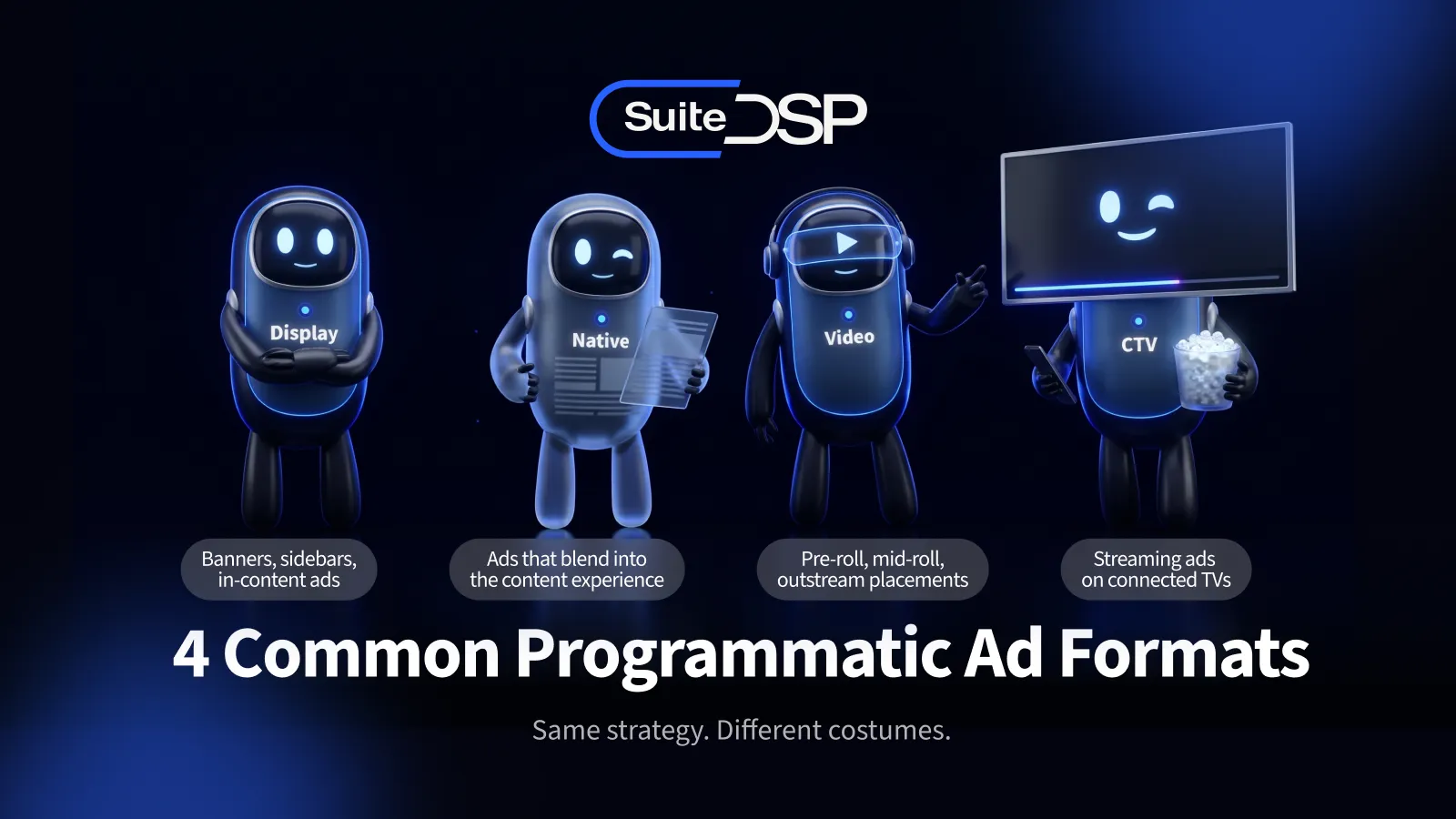
Overview of core programmatic ad formats spanning display banners, native placements, digital video streams, and Connected TV screens.
Programmatic Advertising Formats
There are many advertising formats that can be achieved through programmatic technology. These formats have their own unique advantages based on specific campaign goals.
Display Advertising
Display advertising includes visual placements appearing across websites and applications.
Examples include:
Top-of-page banners: High placements in the early part of a webpage.
Sidebar placements: Placements of ads next to other content on a page.
In-content ads: Placement of ads between paragraphs.
Advertising campaigns that use display advertisements can be useful for awareness, traffic generation, retargeting, and conversion purposes.
Native Advertising
The native ads are designed to fit into the surrounding of the platform. Unlike the traditional banner, the native ads can take the form of recommendation posts, sponsorships or feeds.
This kind of format allows firms to use their promotional messages in a way that fits the manner in which the user uses the site. The native ad should still be identified as an advertisement despite being integrated with the content.
Video Advertising
Video programmatic ad placement enables a brand to display its video advertisements on websites, mobile apps, and streaming platforms. The ad placements can take the form of pre-roll, mid-roll, and outstream video ads. Video enhances product demonstration and storytelling and is performance-measured using completion rate, reach, and viewability.
Connected TV (CTV) Advertising
With the help of CTV advertisements, there is an option of inserting video ads through Internet TVs. In comparison to the traditional linear television advertisement campaigns, programmatic CTV advertisement might provide greater flexibility in terms of audience targeting, campaign management, and tracking.
For example, one can insert CTV advertisement for the auto brand in certain geographical areas along with the campaign being run through online videos and display advertising.
Types of Programmatic Advertising Platforms
Programmatic Advertising includes several interrelated technologies. It becomes much easier to comprehend everything knowing what functions they perform. Individuals who search "What is programmatic advertising platforms?" will most likely be trying to find out about the platform technology that is responsible for automated media buying.
Demand-Side Platforms (DSPs)
Demand Side Platform is a software application employed by advertisers or marketing agencies for purchasing digital advertisement placements.
With a DSP, buyers will have the ability to manage their campaigns across several inventory pools via a single platform. Some of these features include audience targeting, bidding management, budget allocation, campaign optimization, reporting, and many other features for accessing different advertising mediums.
SuiteDSP is one such demand side platform that enables management of programmatic media buying and campaign optimization processes.
Supply-Side Platforms (SSPs)
The supply side platforms help in serving the interest of publishers and proprietors of digital media. The SSP helps the publishers in organizing their inventories, looking for buyers, setting pricing policies, and earning through advertising.
For example, a news website can make use of an SSP to sell its display inventories to various demand sources. The SSP helps in managing the competition among the qualifying buyers for the available inventory. The DSP and SSP operate at two opposite ends of the same spectrum.
Data Management Platforms (DMPs)
Data Management Platforms collect and manage audience data across different platforms. Data management platforms are employed to identify and analyze audience traits and make audience segments for advertisements. With privacy standards changing, advertisers make more use of consented first-party data and contextual cues. A DMP is not necessarily needed for all campaigns.
Programmatic Advertising Deals
Programmatic inventory can be purchased through several transaction models. The right option depends on whether advertisers prioritize scale, exclusive access, predictable pricing, or guaranteed delivery.
Real-Time Bidding (RTB)
Programmatic real-time bidding describes one of the most common types of programmatic buying, where the advertiser makes bids on an impression through auctioning.
Each available impression is assessed depending on a number of factors including target, budget, and bid. RTB is normally associated with open marketplaces, where many advertisers can participate.
Private Marketplace (PMP)
Private Marketplace is an exclusive market where certain advertisers gain access to inventory of publishers. Publishers retain the ability to establish requirements for the purchase of such inventory. However, inclusion into the PMP does not guarantee any impression.
Programmatic Guaranteed
Programmatic guaranteed is a combination of an automated ad campaign process and the direct deal between an advertiser and a publisher. They talk about such vital aspects as price, inventory quantity, and delivery details prior to launching a campaign.
This type of process is ideal for situations where advertisers want guaranteed access to certain placements or audiences. In contrast to the auction process, inventory will be set aside based on the deal.
Preferred Deals
In terms of preferred deals, the advertiser will have the ability to negotiate an agreed-upon rate for accessing selected inventory from the publisher. The buyer will be the first to have a chance to purchase eligible impressions before the impressions become accessible on other platforms.
It should however be noted that the advertiser does not necessarily have to buy all the impressions that are offered.
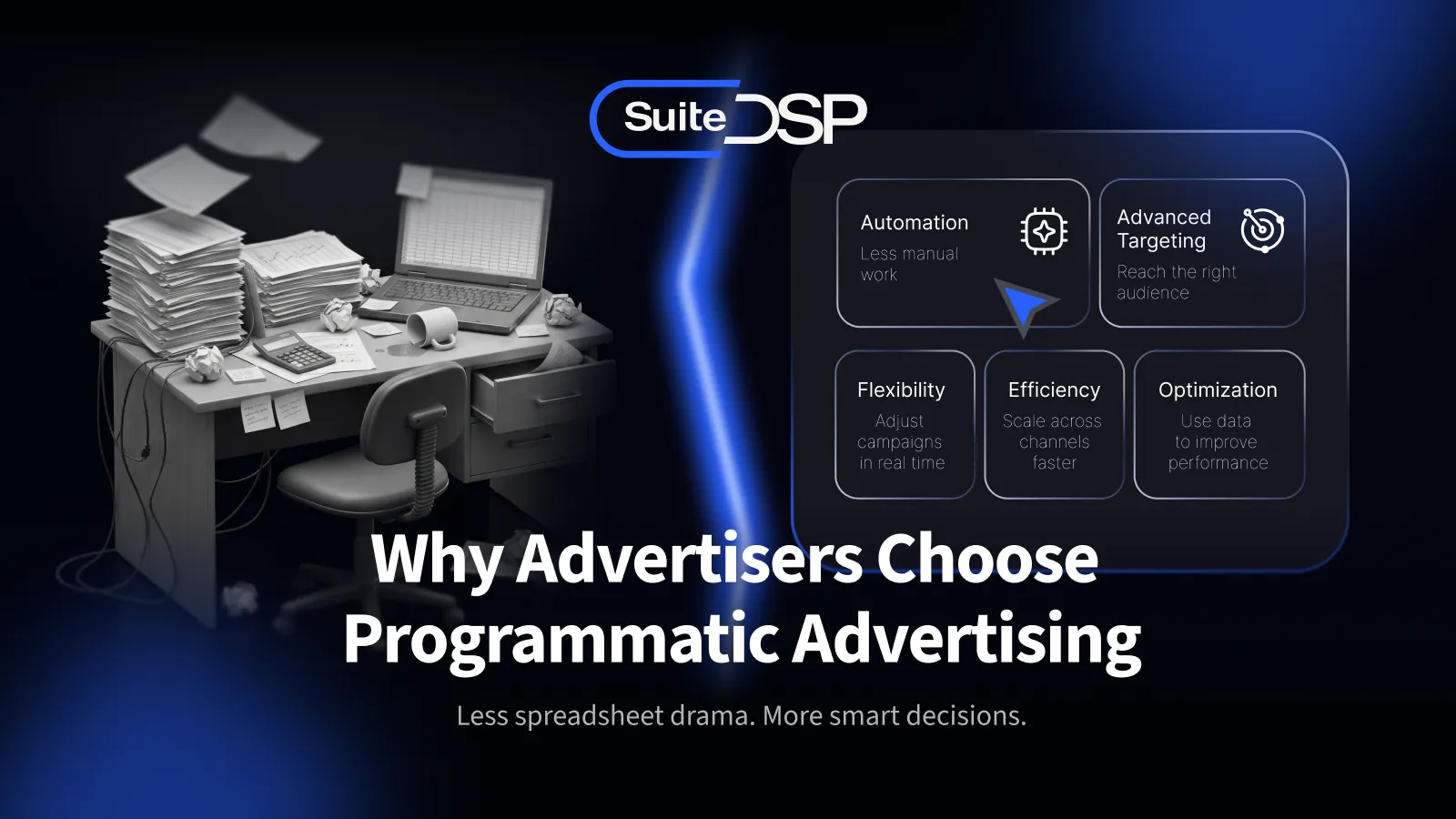
Automating media buying eliminates manual insertion orders, allowing advertisers to reallocate budgets in real time to increase campaign ROAS.
Benefits of Programmatic Advertising
There are a number of reasons why programmatic buying is advantageous compared to media buying done purely manually. The advantages are contingent upon the configuration of campaigns, the quality of the inventory, and targeting capabilities.
Efficiency and Automation
Programmatic approach assists in removing the repetitive nature of the buying process. The campaigns from the advertisers can be executed in an effortless manner across various sites and platforms without negotiating for each placement individually.
Improved ROI
Programmatic buying helps advertisers allocate budgets based on campaign goals and performance data. However, ROI still depends on accurate tracking, suitable optimization strategies, and inventory quality.
Advanced Targeting and Personalization
Programmatic platforms can be used for targeting that takes into account the geographic location, features of the device, context and allowed audience data.
A travel company can target users with weekend package offers, and an e-commerce company may use consented audience data from first party sources to re-target their existing customers.
Better Flexibility
Programmatic advertising campaigns can be modified even during their runtime. The advertiser can make alterations to their bidding strategy, creative, geography, budget, and inventory choices based on their performance.
If one group of customers doesn't generate good results, the advertiser can cut down spending or try another strategy altogether.
Implement Your Programmatic Advertising Strategy
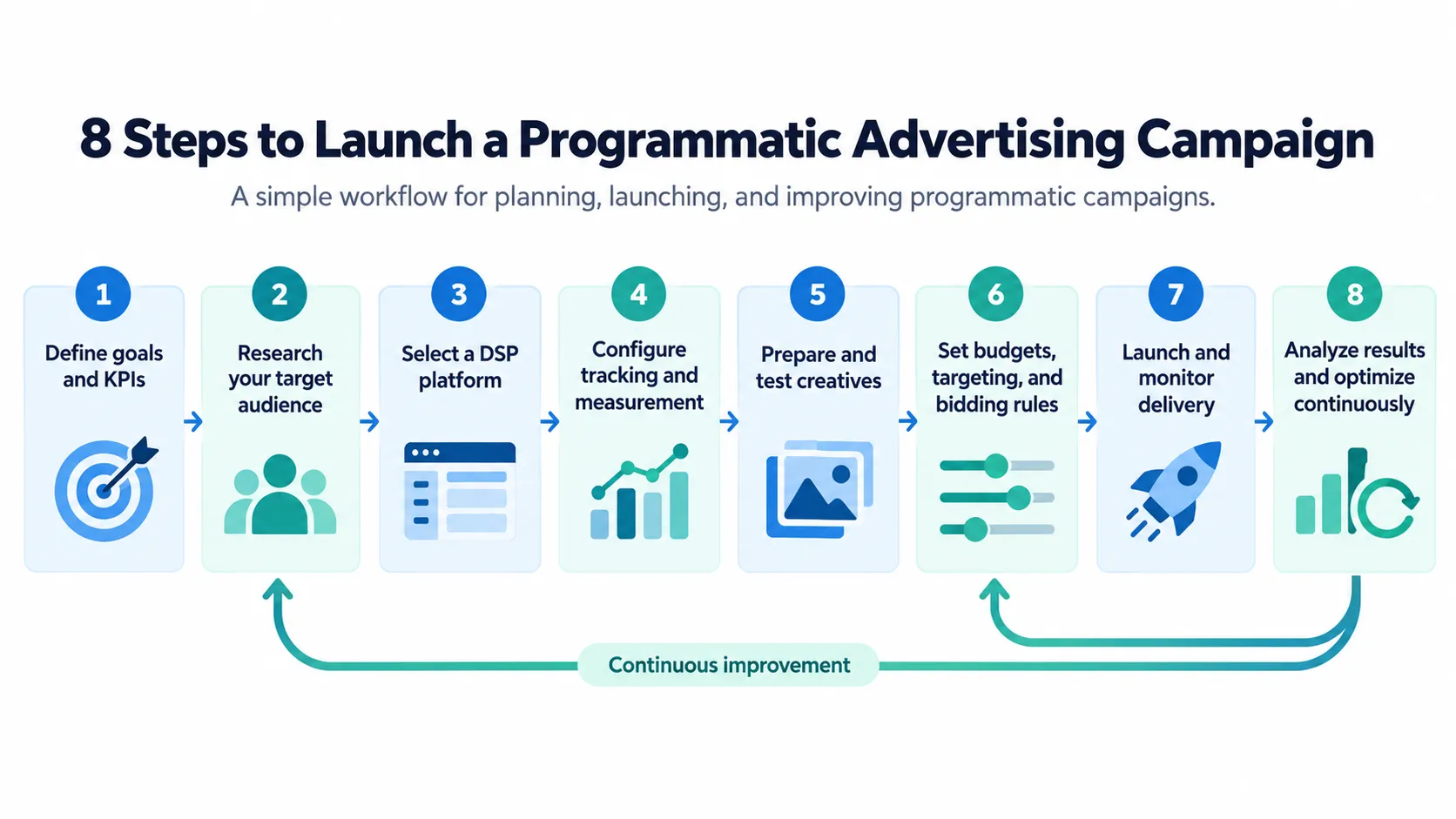
Understanding what is programmatic online advertising is only the beginning of building a successful campaign. Programmatic advertising campaigns also require having clearly defined objectives, good measurement capabilities, and constant optimization. Here are a few things that you can do.
Define Campaign Goals and Objectives
The first thing that you need to do is define the objective of your marketing campaign. For example, it could be increased brand awareness, increasing traffic to your website, generating leads or even making sales online. Find KPIs that match your objectives.
As far as brand awareness marketing campaigns go, reach and viewability can be your key metrics. In case of performance-based marketing campaign, conversions, cost-per-acquisition and return on ad spends are going to be more important. Do not go for cheaper impressions if they do not serve your business goals.
Identify the Target Audience
Conduct market research on the target audience. The factors that need to be taken into consideration are location, preference, behavior, needs, and the internet environment. This can be done using information about the customers, website analysis, market research, etc., depending on the situation.
Market research plays an important role in guiding the process of targeting and creating content. For example, if the product that the company sells is software, then the target audience will include businessmen and industry-based content.
Choose the Right DSP Platform
DSP will be an integral element in the process of implementation of your campaign. The platform needs to be analyzed using factors including inventory, advertisement capacity, targeting, reporting, transparency, and usability. SuiteDSP assists advertisers in managing their programmatic advertisements via a DSP specifically for that purpose.
Set Up Tracking and Measurement
Install the tracking tools before starting the campaign. It could either include website analytics tools, conversion tracking, campaign settings, and attribution settings according to your objective. Make sure that events are being tracked well and the reports are showing exactly what you want to track. Privacy and consent need to be considered while installing the tracking tool.
Create and Test Advertising Assets
Come up with unique content that suits your chosen channel, placement rules, and the audience you’re targeting. If it’s display ads, then visual hierarchy and concise text is important. This should happen quickly since you have no time for video ads. Create creatives that suit the particular format and audience. Experiment with different headlines, pictures, calls-to-action, and messaging to find out what works well.
Configure Campaign Settings
Configure the parameters for your marketing campaign on DSP, which might include the following parameters: budget, schedule, targeting, bidding, frequency cap, and placements of the ad. The other parameters that you could configure include geolocation, mobile device targeting, brand safety, as well as exclusion lists.
Launch and Monitor the Campaign
Review campaign settings, tracking, and creatives before launch. Once live, monitor delivery, spending, tracking accuracy, and early performance before making significant adjustments.
Analyze Performance and Optimize Results
Continuously evaluate results across channels, audiences, devices, creatives, and inventory sources. Refine targeting, adjust bids, update creatives, and redistribute budgets based on performance.
Final Thoughts
Programmatic advertising makes digital media buying more efficient through automation, data-driven targeting, and real-time optimization. From display and native ads to video and CTV, advertisers can reach relevant audiences across multiple channels.However, successful campaigns still require clear goals, quality creatives, accurate measurement, and continuous optimization.With SuiteDSP, advertisers can manage programmatic buying and refine campaign performance through a dedicated DSP platform.Ready to get started? Explore SuiteDSP's programmatic advertising solutions.
Talk to the SuiteDSP team and discover how programmatic advertising can help you reach the right audience with greater precision and efficiency.
FAQ
How much does programmatic advertising cost?
The cost of programmatic advertising is determined by a channel, audience, quality of an inventory, level of competition, and buying method. Often, the cost per mille (CPM) is applied, which means the cost of one thousand impressions. Additional charges might occur due to the fees of a platform and other services. Consider the opportunity to test SuiteDSP to get acquainted with the campaign settings that might work for you within your budget.
Is programmatic advertising suitable for small businesses?
Yes. Programmatic advertising can be used by small businesses to target their audiences, keep under control their expenses and experiment with various strategies of advertising. However, minimum budgets and demands of the platform might differ. Start with your goals and reasonable expectations, then consider whether you need a DSP like SuiteDSP.
What are some examples of programmatic advertising?
Display banners in news websites, native advertisements in content feeds, video advertisements in digital media, and CTV commercials in streaming platforms are some examples of programmatic advertising. They can be bought programmatically if available and appropriate for a campaign setting.
What skills are needed to manage programmatic advertising campaigns?
Among useful skills are research of target audience, campaign planning, analytics, budgeting, testing of creative, and knowledge of DSP functionality. The knowledge of measurement and advertising metrics is also valuable. Novices can begin from researching what programmatic advertising is and how buying methods influence campaign results.
Is programmatic advertising the same as real-time bidding?
If you've searched for "programmatic advertising what is it," the answer is broader than real-time bidding. Programmatic covers multiple automated buying methods, including RTB, private marketplaces, preferred deals, and programmatic guaranteed.