
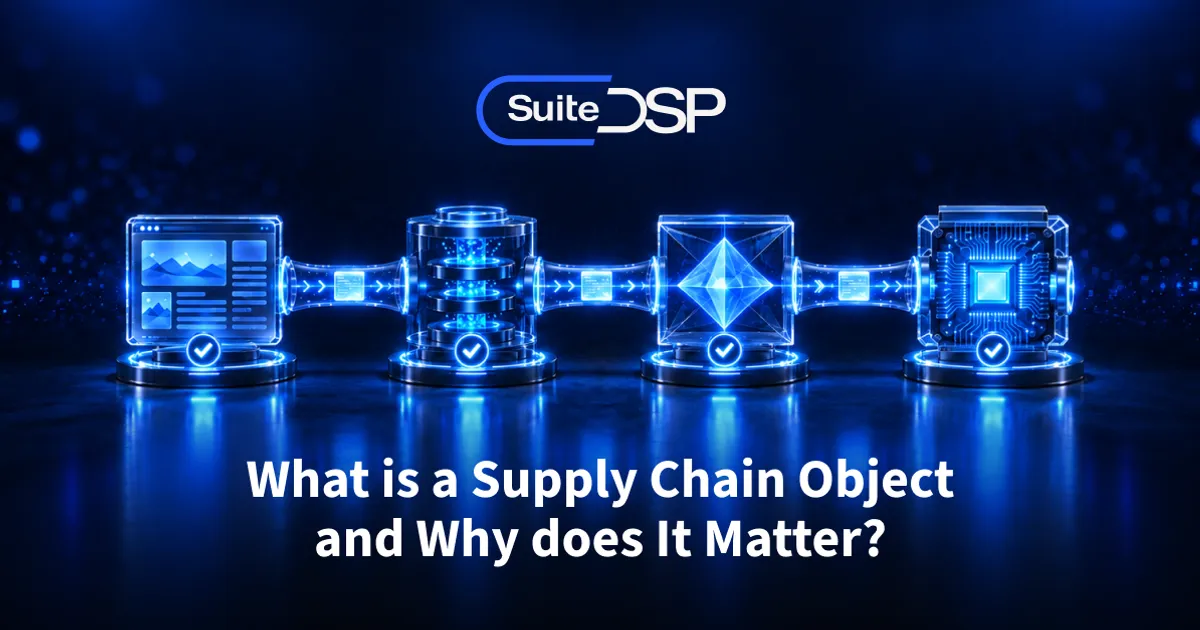
Programmatic advertising moves fast. An impression becomes available, a bid request travels through the ecosystem, buyers evaluate it, bids come back, and an auction happens in milliseconds.
The transaction may be fast. The route behind it isn't always simple.
A single impression can pass through several companies before reaching a DSP. There may be a publisher, SSP, exchange, reseller, or another intermediary involved in the transaction. For a buyer, that creates a basic but important question:
Who exactly is involved in selling this impression?
That is what the Supply Chain Object, usually called schain, helps answer.
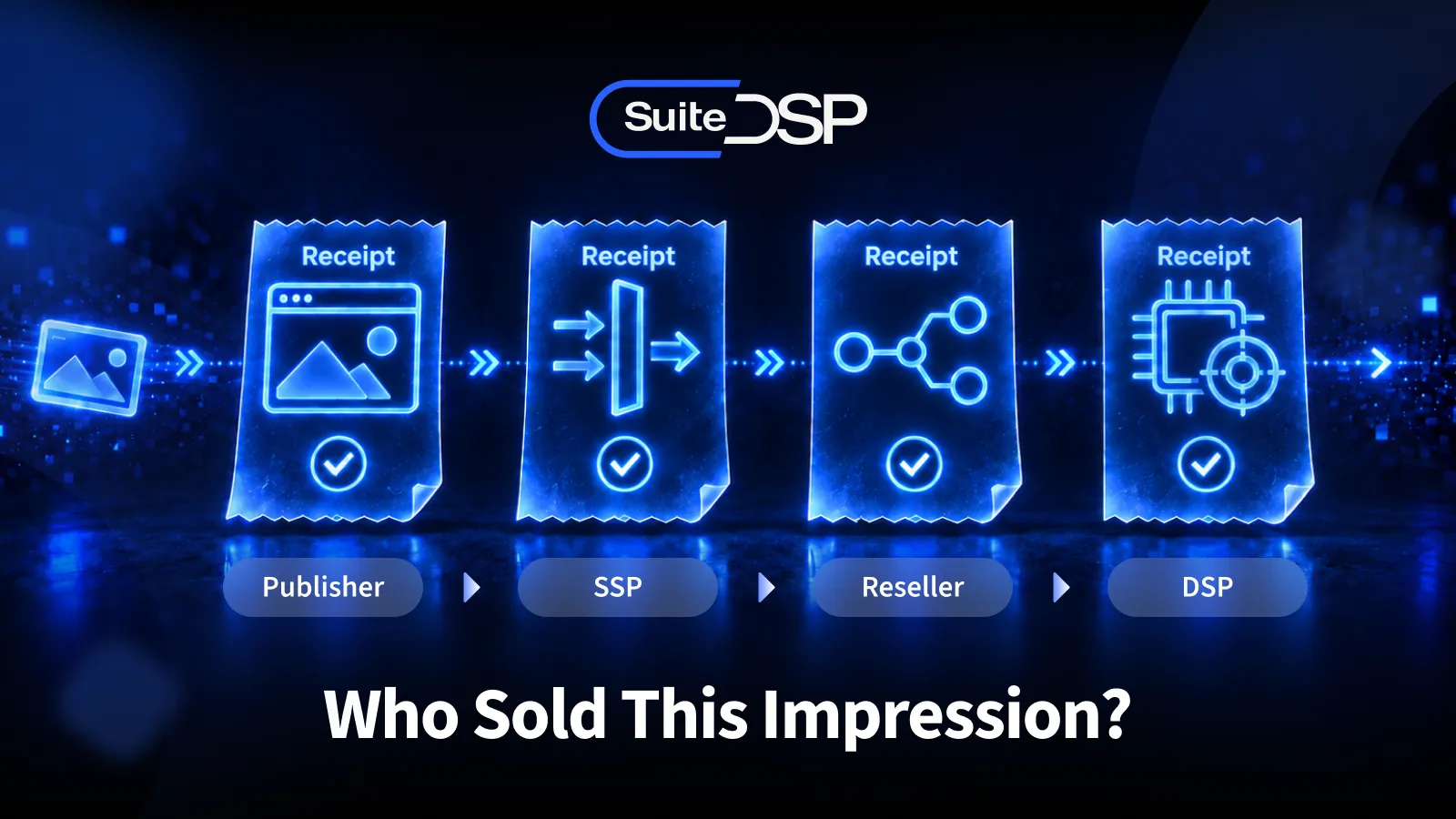
Each node in an schain object acts as a transaction record identifying every seller involved in the payment flow.
What Is a Supply Chain Object?
The Supply Chain Object is an OpenRTB mechanism designed to show buyers the entities involved in selling or reselling a particular bid request. IAB Tech Lab finalized the SupplyChain specification alongside sellers.json to improve transparency on the sell side of programmatic advertising.
Think of schain as a record that travels with the bid request.
It doesn't tell a DSP whether an impression is good. It tells the DSP more about how that impression reached it.
The object contains a series of nodes. Each node represents an entity participating in the direct payment flow for the inventory. Google, for example, describes schain as part of an OpenRTB bid request and uses these nodes to identify the parties selling or reselling inventory.
That distinction matters.
Programmatic buyers don't just need to know what they're buying. They increasingly need to understand the path through which they're buying it.
How Does schain Work?
A schain object is attached to the bid request and contains information about the sellers involved in the transaction.
At a high level, it includes the specification version, whether the chain is considered complete, and the nodes representing participating sellers. Individual nodes can contain fields such as the advertising system identifier (asi), seller ID (sid), and whether the node is involved in the payment flow.
So instead of receiving an impression with little context about its route, a DSP can get a clearer view of the commercial chain behind it.
A direct publisher relationship may produce a short chain.
A resold impression may have several nodes.
Longer doesn't automatically mean bad. This is worth stressing because supply-path discussions can become overly simplistic. An intermediary can provide legitimate value. What matters is whether buyers can identify the parties involved and make informed decisions about the path.
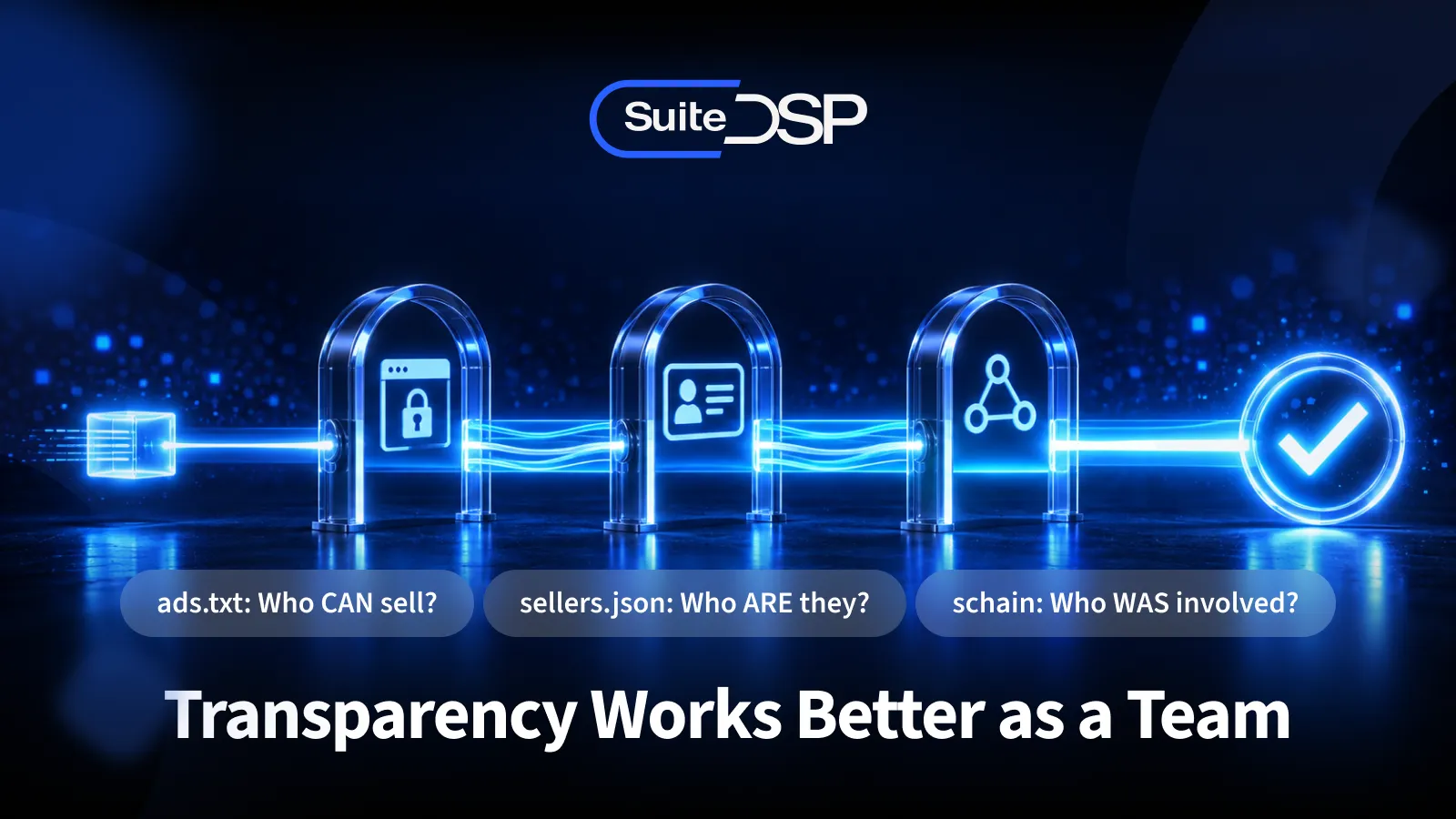
Combining ads.txt, sellers.json, and schain gives programmatic buyers a 360-degree verification model for inventory legitimacy.
schain, sellers.json, and ads.txt: What Is the Difference?
This is where people often mix up the terminology.
ads.txt and app-ads.txt allow publishers to declare which companies are authorized to sell their inventory. App-ads.txt extends that concept to applications, including mobile and Connected TV apps.
sellers.json works from the selling platform side. It helps buyers identify the entities that are direct sellers or intermediaries within a selling system.
schain describes the actual sequence of sellers associated with an individual bid request.
The three standards are much more useful together than in isolation.
A buyer can inspect the schain, use sellers.json to understand the identities behind its nodes, and compare those relationships with authorized seller information. Google similarly describes SupplyChain as working alongside ads.txt, app-ads.txt, and sellers.json to provide greater transparency into programmatic inventory.
In practical terms: ads.txt answers who is authorized, sellers.json helps answer who the seller is, and schain helps show the route this bid request took.
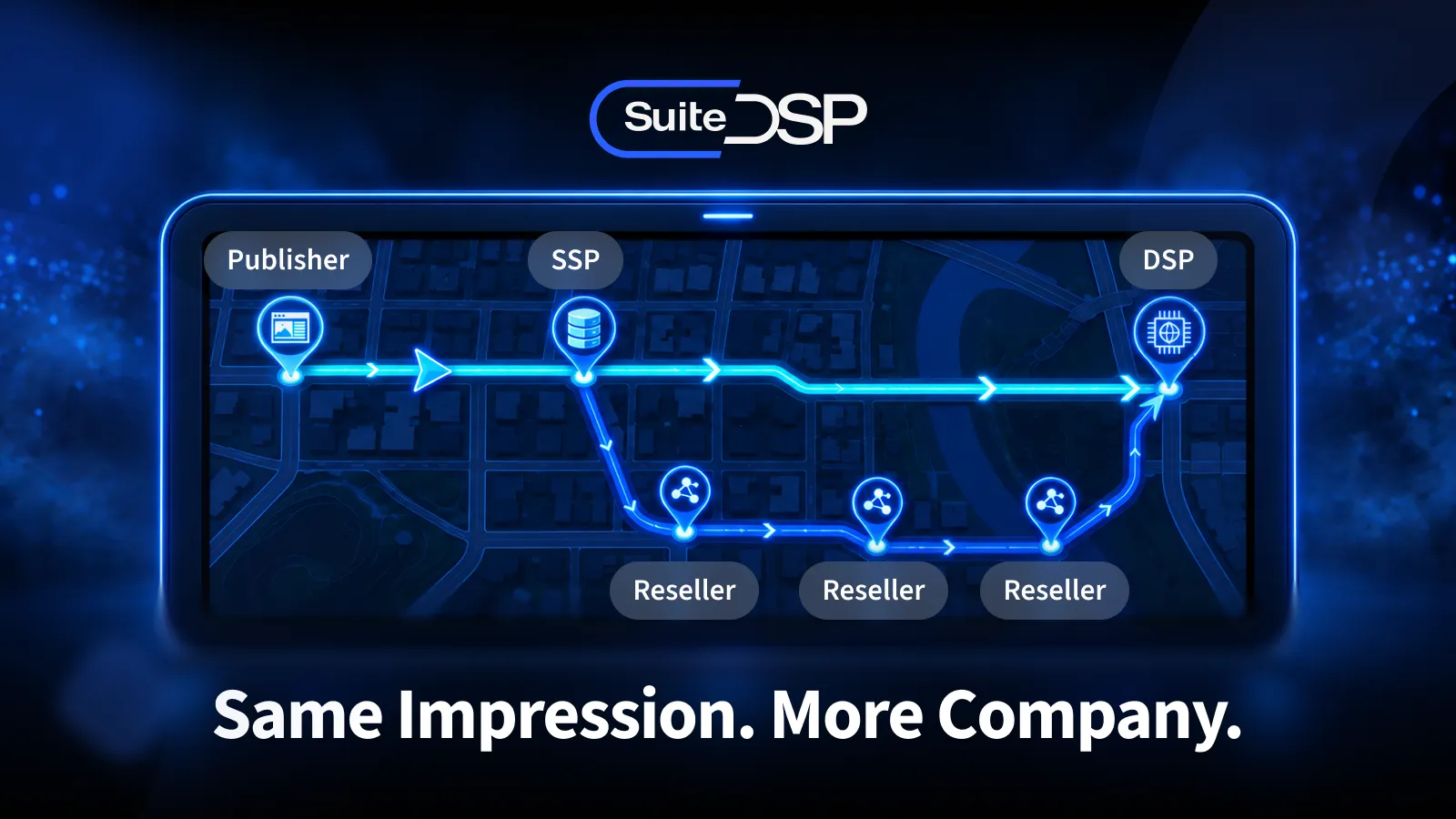
SPO isn't just about eliminating steps—it's about auditing multi-hop reseller routes to eliminate hidden fees and redundant auction loops.
Why Does schain Matter to Advertisers?
Because programmatic efficiency isn't only an auction-price question.
Imagine two routes to substantially similar inventory. One is relatively direct. The other passes through several intermediaries before reaching the DSP.
Without supply-chain information, those routes can look more alike than they really are.
With schain data, buyers have another signal for evaluating how inventory reaches them. That can support supply path optimization, seller verification, inventory-quality controls, and decisions about which supply relationships deserve more spend.
It can also help identify unnecessary complexity.
Every additional step in a transaction may introduce another commercial relationship, another fee structure, or another point where the inventory becomes harder to evaluate. That doesn't make every multi-node path inefficient. It does mean the path itself is relevant information.
SupplyChain transparency can help buyers understand participating intermediaries and determine whether inventory is being purchased as directly as possible.
That is the real value of schain: visibility before judgment.
Supply Path Transparency Is Also a Trust Issue
Fraud prevention in programmatic advertising rarely comes down to one field, one file, or one standard.
schain isn't a fraud detector by itself.
What it does is make opaque supply relationships harder to ignore. When combined with sellers.json and ads.txt/app-ads.txt, buyers have more information available to verify whether inventory is moving through expected and authorized channels. IAB Tech Lab describes these standards as tools for understanding the origins, paths, and legitimacy of inventory reaching buying platforms.
For advertisers, that can translate into more confidence about where media budgets are going.
For DSPs, it provides useful information for evaluating supply.
For publishers and legitimate intermediaries, greater transparency can make their role in the transaction easier to demonstrate.
There is another practical point here. Transparency standards only work when the information is implemented correctly. An incomplete or inaccurate chain cannot provide the same level of visibility as a properly constructed one.
The data matters. Data quality matters just as much.
What Does schain Mean for Supply Path Optimization?
Supply Path Optimization, or SPO, is often described as reducing the number of intermediaries between buyer and publisher.
That's only part of it.
A useful SPO strategy is about choosing better supply paths, not blindly choosing the shortest ones.
Price matters. So do inventory quality, scale, auction dynamics, technical performance, seller relationships, and transparency.
schain gives a DSP another piece of that picture.
A buyer can examine who participates in the transaction, identify duplicated or unnecessarily complicated routes, and make more deliberate choices about where demand is directed. That is much more useful than treating every exchange connection as interchangeable.
The result can be a cleaner buying strategy with better visibility into the mechanics behind each impression opportunity.
Why schain Matters Even More Across CTV and Omnichannel Buying
Supply transparency becomes particularly important when campaigns stretch across display, video, mobile, native, and Connected TV.
CTV is a good example. Its programmatic ecosystem can involve app publishers, platforms, exchanges, and other supply partners. IAB Tech Lab's CTV programmatic guidance specifically includes sellers.json and the SupplyChain Object among the standards buyers can use to understand sellers and intermediaries.
Advertisers therefore need more than access to inventory. They need enough information to understand where that inventory comes from and how it reaches the buying platform.
And transparency is only one piece of effective CTV execution.
Frequency is another.
If you're working with Connected TV campaigns, read our previous article, CTV Frequency Capping: Why It Matters for Advertisers, where we look at why controlling repeated exposure matters for campaign efficiency and viewer experience.
Better Programmatic Buying Starts With Seeing the Path
schain is a small technical object carrying a surprisingly useful piece of information.
It makes the supply route visible.
Used alongside sellers.json and ads.txt/app-ads.txt, it helps DSPs and advertisers better understand who is involved in selling inventory and how a bid opportunity reached the buyer. That information can support verification, SPO, inventory-quality decisions, and more transparent media buying.
Not every long supply path is bad. Not every short one is automatically good.
But an invisible path is difficult to evaluate.
That is exactly why schain matters.
At SuiteDSP, we help advertisers turn programmatic complexity into clearer, more efficient campaign execution across channels. Want to understand your supply paths, improve media efficiency, or get more from your programmatic strategy?
Talk to the SuiteDSP team and let's discuss what your campaigns need.